
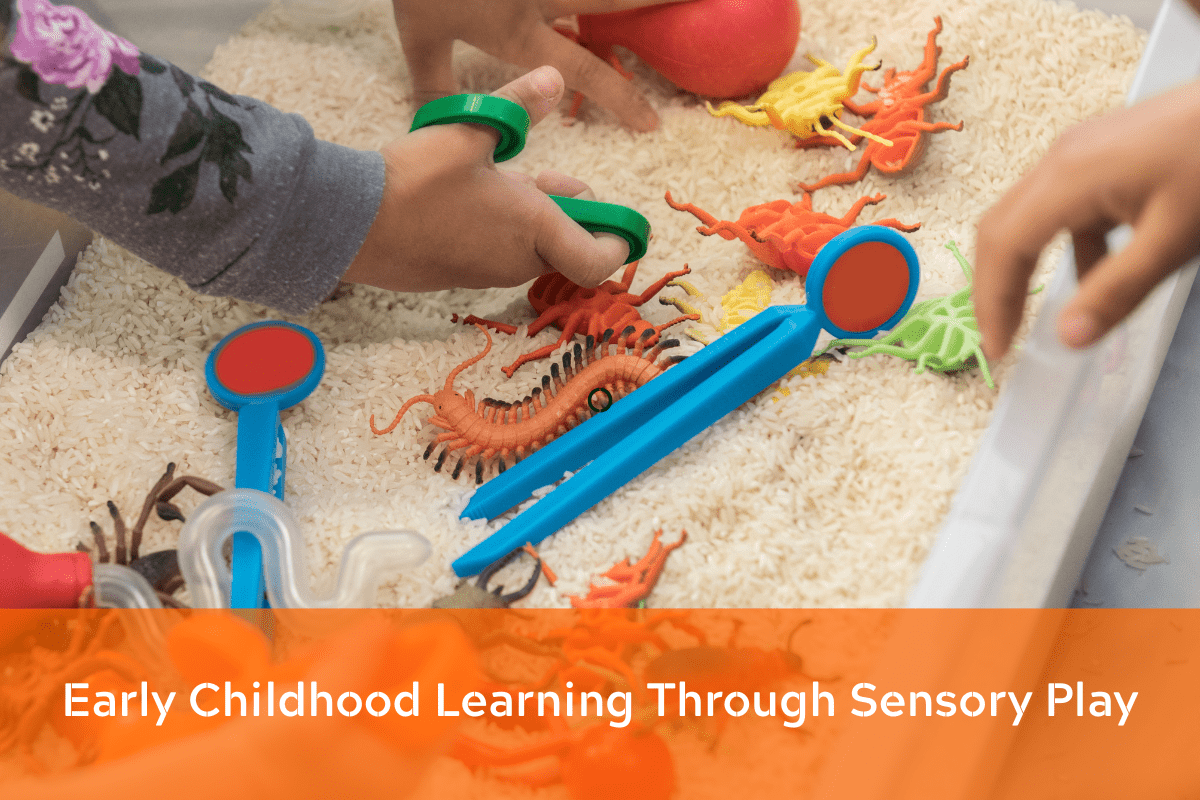
Early childhood learning through sensory play is a key part of early childhood development. It helps children explore the world through touch, movement, sight, and sound while building important cognitive and physical skills. These hands-on experiences support brain development, strengthen problem-solving abilities, and encourage language growth. Sensory activities also promote curiosity and independent exploration, allowing children to learn through play.
Providing a variety of sensory experiences supports well-rounded development and keeps children engaged in meaningful ways.
Water Play
Water play is one of the most engaging sensory activities for young children. As children pour, scoop, and splash, they begin to understand early science concepts like buoyancy, volume, and cause and effect. They observe how water moves, how objects float or sink, and how containers fill and empty. Water play also supports fine motor development and coordination. The repetitive nature of water can have a calming effect, which helps with emotional regulation and focus.
Sand and Texture Play
Sand and texture play provide important tactile experiences that support sensory development. Children dig, shape, and build using materials like sand, play pellets, rice, dried pasta, sensory beads, sensory balls, and sensory noodles. These activities strengthen hand muscles and improve fine motor skills. Exploring different textures also helps children process sensory input and become more comfortable with new experiences. This type of play encourages creativity and imaginative thinking as children create and explore their own environments.
Nature-Based Sensory Play
Nature-based sensory play introduces children to a wide range of natural textures, sounds, and visual elements. Grass, leaves, rocks, and other natural features used in a nature table create opportunities for exploration and discovery. Uneven surfaces and loose materials help develop balance, coordination, and problem-solving skills. Nature play also encourages curiosity and creativity since there is no single way to interact with the environment.
Movement and Vestibular Play
Movement-based sensory play supports the vestibular system, which helps control balance and spatial awareness. Activities like climbing, swinging, and balancing help children develop coordination, strength, and body control. This type of play builds confidence as children test their abilities and learn through movement. It also supports overall physical development and helps children stay active and engaged.
Auditory and Interactive Play
Auditory and interactive play engage children through sound and social interaction. Musical elements and interactive features support listening skills, rhythm, and early communication. Children often play together in these spaces, which encourages cooperation, turn-taking, and language development. These experiences help build social skills while adding another layer of sensory engagement.
Incorporating different types of sensory play supports the full range of early childhood development. Each experience contributes to cognitive growth, physical skills, and emotional well-being. Providing diverse sensory opportunities helps create inclusive play environments where all children can explore, learn, and thrive.